Thomas Lehn
read
read
BERTONCINI / LEHN
Tiziana Bertoncini • violin
Thomas Lehn • analogue synthesizer
about | discography
| reviews |
projects | biographies | audio | video | downloads
| tourdates
^
about
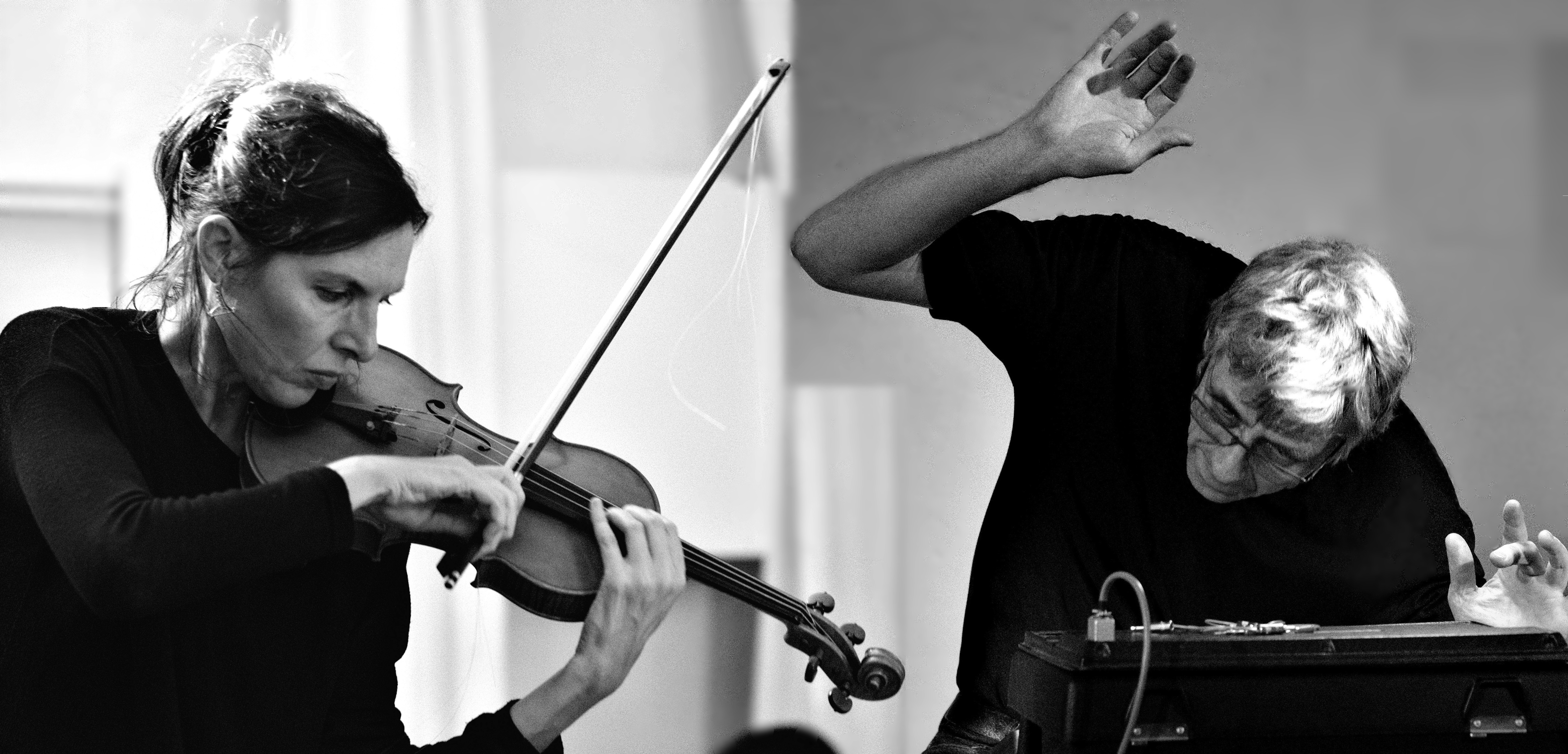
photo ©
Photomusix/Cristina Marx
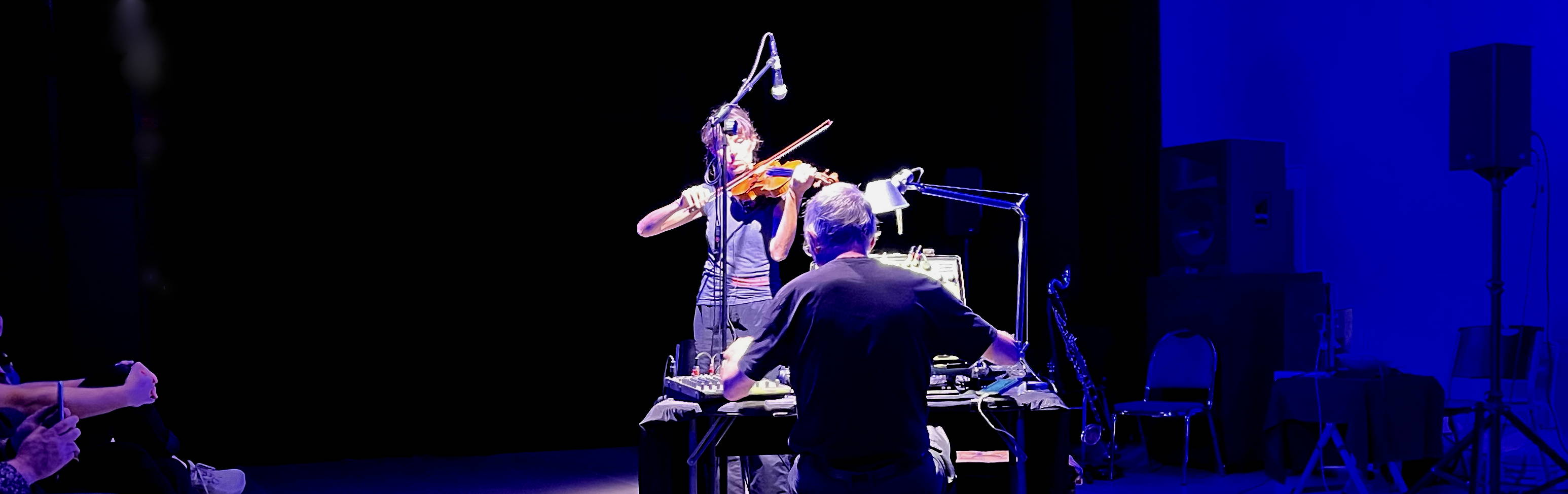
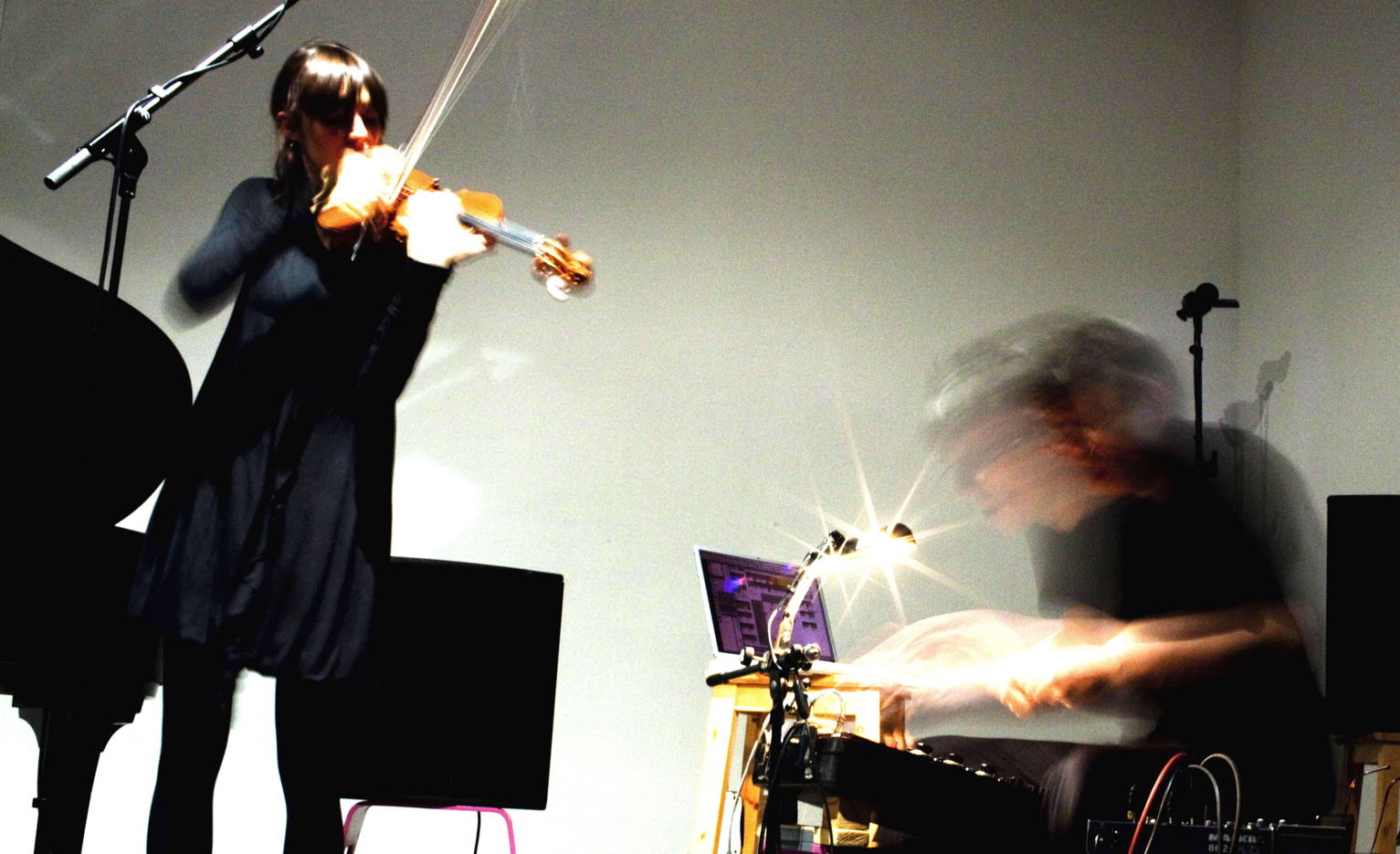
Tiziana Bertoncini and Thomas Lehn have been collaborating since 2002.
The special feature of the duo is the alchemy created by the meeting of the classical and the electronic instrument. The different nature of sound, the characteristics and histories of violin and analogue synthesizer could recall a friction. Actually, what happens is a sort of mirror game, in which the roles of the instruments are continuously exchanged. Bertoncini and Lehn move in an abstract territory, their approach to sound is contemporary. Nevertheless their consideration to music is quite classical insofar as based principally on tension/release, rupture, intensity and expressivity in all its facets.
Their first CD Horsky Park, was released in spring 2011 on British label Another Timbre.
They have been performing together in Austria, Germany, England, France, Switzerland, Italy, Slovakia, The Netherlands and the USA.
Beside their duo work, they play in larger or extended constellations, like the ensemble]h[iatus, an international ensemble with an extensive experience in the field of improvisation and interpretation of contemporary pieces. With this ensemble they played in numerous festival of contemporary music and premiered works by young and established composers like for example Vinko Globokar, Peter Jakober and Jennifer Walshe.
Bertoncini and Lehn have been part of multimedia projects, in which they were involved as musicians and performers.
In collaboration with ZAM Zentrum für aktuelle Musik they initiated comprovise, a festival for contemporary composed and improvised music, which took place first time in June 2009 in Cologne supported by the german Netzwerk Neue Musik project. In 2016 and 2021 the 2nd and 3rd edition followed in co-curation with Nina Polaschegg and Bruno Strobl, produced by IGNM and co-produced by Wien Modern.
In 2024 they created together with Austrian composer Peter Jakober the concert project samen which embraces both practices of contemporary music: compositon and improvisation.
^
discography
Horsky Park | Pounding Ponc | ensemble]h[iatus | November Music | Audiology II | Live at Saint-Merri
Tides
^ ^^
Horsky Park
Released April 2011 on British CD label Another Timbre
www.anothertimbre.com | at40 | video | reviews | discogs | bandcamp
track listing
1. galaverna (29:56)
2. moss agate (12:52)
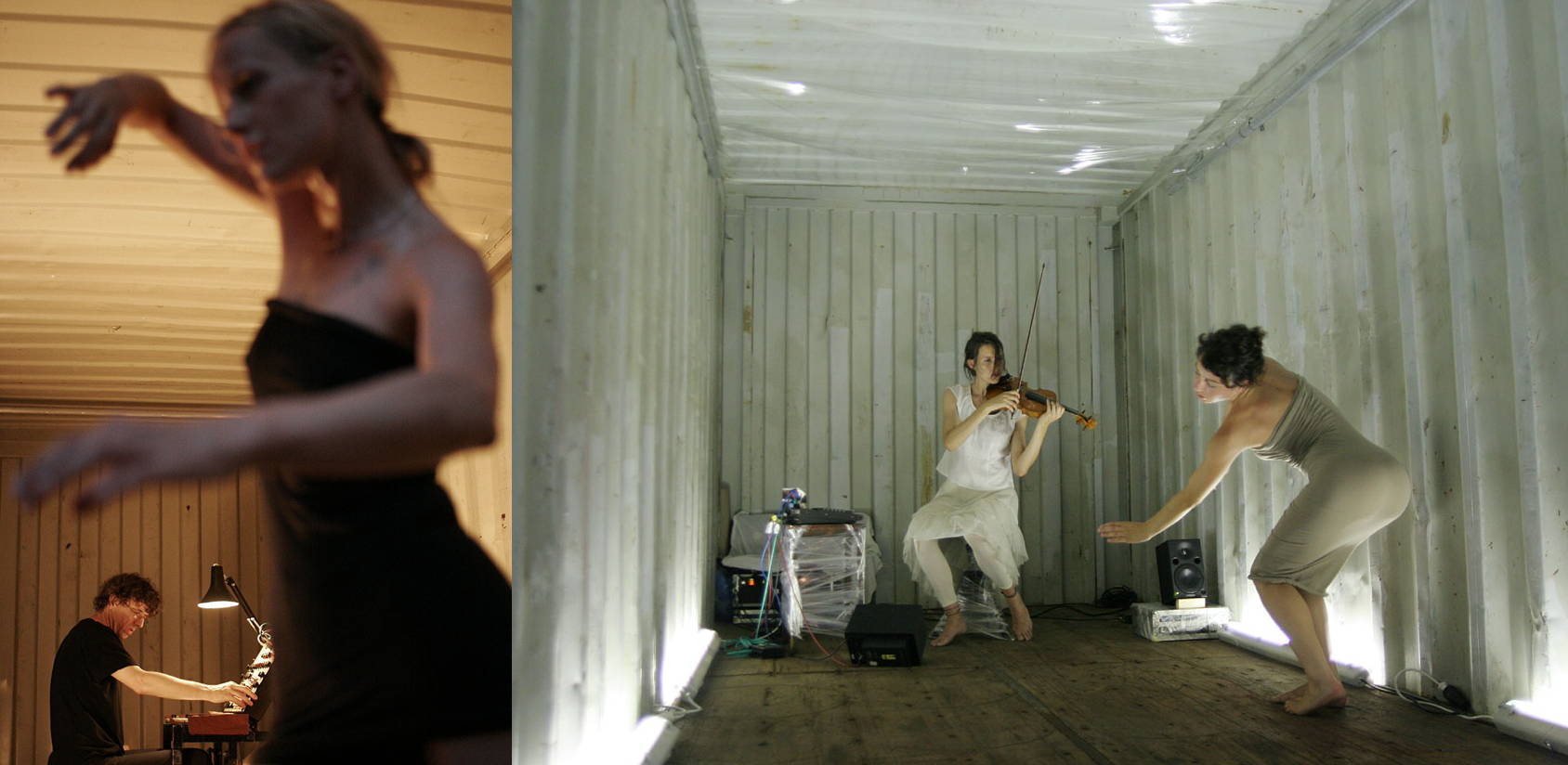
The live performance of moss agate documented on this CD took place in an atrium of twenty-four containers during the dance-installation-media festival art-ort. The performers were located in two open containers facing each other, equipped with sound projection systems.
Moreover, the audio signal of the violin was routed into the synthesizer‘s external input to achieve a cross-effecting realtime sound processing. As several performances of different kind happened simultaniously in and around several other containers, some of the stronger „environmental“ sounds merged into this recording.
galaverna, recorded in a large exhibition hall of the Triennale Bovisa in Milan, does not include any sound processing.
^ ^^
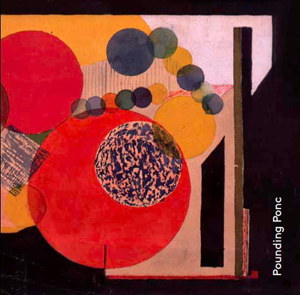
Pounding Ponc
Various Artists.
Released March 2015 by Moravská Galerie
www.moravska-galerie.cz | MG 001 | discogs
Includes gradients (2014), a 12 minutes realisation by Tiziana Bertoncini and Thomas Lehn of the graphical composition K-2591 Coloured Melody Line Composition (ca. 1925) by Czech composer Miroslav Ponc.
About gradients : When approaching a graphic score like Ponc's one, the question which raises up is, if it is a pure visual art work - thus the music has to be created entirely by the interpreters - or if the visual elements represent musical parameters. Eventually, we couldn't fully answer to this question, because the informations we could find about Ponc and his music were really lacking. Therefore, we approached the score in a mixed way: regarding the datas we've found (e.g. connection between colours and pitches), referring to the graphic's proportions for time durations and 'inventing' the rest (sound material, dynamics, timbres, etc.). In spite of this, the image is still represented.
^ ^^
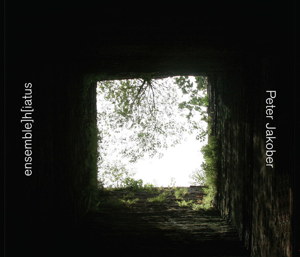
ensemble]h[iatus / Peter Jakober
Produced and released February 2017 by Césarè
www.cesare-cncm.com | Césaré 16/10/17/1 | CD cover & booklet: pdf | discogs
The CD includes three compositions by Austrian composer Peter Jakober and three improvisations by ensemble]h[iatus.
track listing
1. Peter Jakober – beneden (13:44)
2. ensemble]h[iatus – improvisation 01 (9:13)
3. Peter Jakober – mehr, ein wenig (10:14)
4. ensemble]h[iatus – improvisation 02 (17:05)
5. Peter Jakober – weit beisammen (9:33)
6. ensemble]h[iatus – improvisation 03 (7:32)
^ ^^
November Music 2011
Various Artists.
Released 2011 by November Music
www.novembermusic.net | NM 015 | discogs
Includes Metta (2011) by Irish composer Jennifer Walshe performed by ensemble]h[iatus.
^ ^^
Total Music Meeting 2002 - Audiology II
Released 2003 on a|l|l 006 FMP
European Free Improvisation | discogs
Includes Noise Report (2001) by Tiziana Bertoncini and Thomas Lehn
^ ^^
Live at Saint-Merri
Released December 2, 2024 on ANTI MATTER PLANT
www.anti-matter-plant.org | discogs
online/stream release, featuring a recording of a 25 minutes live performance of the duo Bertoncini/Lehn on May 28th, 2015, at the festival imprudences taking place in the church Saint-Merri in Paris. This document captures the astounding acoustics of the church and the adaption of the duo playing in and with it.
^ ^^
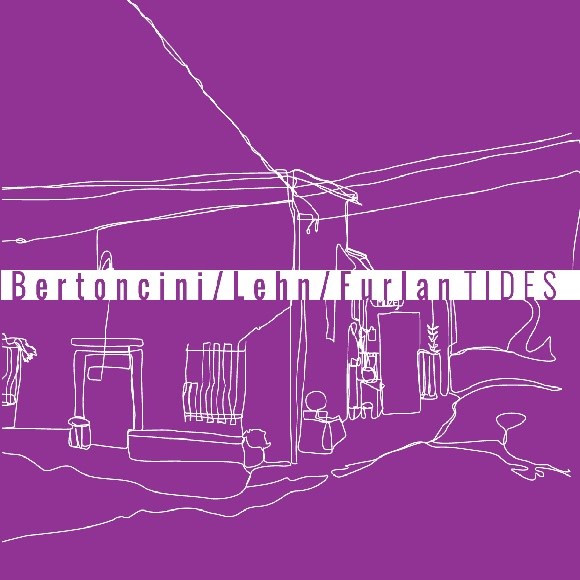
Tides
Released November 2025 on Klopotek IZKCD164
www.klopotec.si
featuring Tiziana Bertoncini (violin), Thomas Lehn (analogue synthesiser) and Gal Furlan (drums, percussion)
recorded live on July 2nd, 2025 by Iztok Zupan at Klub Štala, Ajdovščina, Slovenia
^
reviews CD Horsky Park
EN | DE | FR | SE | HU
At around the ten-minute mark of Galaverna, the opening half-hour-epic of Horsky Park, something extraordinary suddenly occurs: Using a tiny island of silence as her home ground, violinist Tiziana Bertoncini first paints a few emaciated brushstrokes of cool, Webern-like sparsity on the all but empty canvas of the piece, then throws herself into an extended harmonic cycle which sounds as though it had been lifted straight from a Bach partita. Even Thomas Lehn, who'd until then countered each and every of her figures with an equally witted response, seems dumbfounded by the audacity of the move, remaining silent for the entire duration of the solo, which increasingly turns into an objet trouvé, an acoustic anachronism within a sonic space spanned up by electronic crackle, subsonic swells and pingponging rhythmical synth patterns. For a full one and a half minutes, Bertoncini's web grows tighter and tighter, her fingers flying across the fretboard as the speed of her arpeggios is attaining dizzying levels. Then, as if awaking from a deep slumber, Lehn re-enters the arena, fighting fire with fire and extinguishing his partners increasingly frantic spins with a ferocious blast of analog noise. It isn't the first time their ardent personalities are coming to a passionate collision on Horsky Park and it won't be the last either. And yet, it may well be the most striking one, turning the logic of the encounter upside down and suggesting that this, their first album after an almost ten-year long release gap, is one of grand gestures and big postures.
It is true that sentiments can occasionally run high with the duo and Horsy Park has undeniably turned into a work which doesn't just offer a clear sense of dramaturgy, but of drama as well – if the movies left you cold of lately, this album could turn into the cinematic revelation you've been waiting for. But it leaves just as much space for subtlety and the quietude between the notes, for moments of delicacy, refinement and even tenderness. At times, Lehn will dive into the darkest depths of his synthesizer, pitching tones down towards the borders of perception and restricting his operations to sculpting and bending their waveform. In others, he is creating translucent atmospheres made up of short-wave pulse-emissions, almost weaving together the emperor's new symphonies from all but intangible materials. Bertoncini, on the other hand, isn't just capable of strikingly mediating between the 21st century and the romantic era, of translating emotions into abstractions and back again. Sometimes, a single sustained note will be enough for her to significantly change the mood and impact of a particular scene, to support Lehn in his processings or to question, confuse and counterpoint him. Although their conflicts are almost certain to leave the most lasting memories on the first few listens, what makes their interaction so addictive for their audience are the instances which initially seem sidethoughts - but which keep haunting one long after the piece has ended.
If, then, Horsky Park, as many have already reported and to which this author will readily testify as well, is a record which almost addictive qualities, then not so much so because it is immediately pleasing, but because it keeps disturbing its audience. There doesn't seem to be a clear-cut modus operandi, let alone a goal, a development, denouement or a "meaning". Even the companion piece to Galaverna - moss agate - performed in an action-packed environment of twenty-four containers at the Art Ort festival - never amounts to fully fledged concept art. And yet, one can distinctly sense that these two experienced performers are not just working from "the moment", but building long suspense archs instead, sometimes replying to each other or reworking their motives from a couple of minute's distance. On more than just one occasion, it isn't quite clear who is doing what – one of the strongest passages involves Bertoncini mimicking Lehn, who in turn seems to be mimicking an aeroplane. Which may be down to two important qualities of their duo: On the one hand, a congenial fusion of characters, as part of which Lehn is drip-fed from a infusion of Italian blood, while Bertoncini's red-hot wounds are cooled with Swiss ice packs. On the other an approach as part of which each protagonist isn't merely interacting with the other, but with himself as well – Lehn, especially, has a preference for entering into call and response games with his analogs, spreading his themes out across the stereo image and then creating constantly shifting feedback loops.
Throughout, there's a fine line between reticence and holding back one's power, between talking straight and in metaphors. Importantly, however, there never seems to be a case of meta-art. The Bach-sequence mentioned in the first paragraph isn't so much a quote as it is an organic response to the challenges at hand, as much a part of the duo's vocabulary as a series of rhythmical pluckings or a chain of glistening crackle. So, too, is the opening sequence, which has an almost Mahler'ean grandeur to it, resembling the opening bars of the latter's first symphony in their otherwordly elation. Apparently, Bertoncini and Lehn are equipped with a pair of uniquely different ears, answering rough blocks of sound with lyrical melodies or a moment of rhythmical propulsion with static harmony.
The most surprising feat, then, is that the music never sounds disjointed, but in fact perfectly coherent and natural. Which may explain the ongoing allure of the album: If there's a system at work here, it isn't revealing itself easily.
Tobias Fischer | Tokafi
^ ^^
Horsky Park is the title of the rather fine new album by Thomas Lehn and Tiziana Bertoncini, one of yet another new batch of discs on the seemingly infatigueable Another Timbre label. Lehn’s music I know very well, his work on analogue synth is, in my opinion unrivalled. Bertoncini however, an Italian violinist is a new name to me, though about of googling around informs me that she has been working in various ways with Lehn for almost a decade now. This is the fortieth AT release ‘proper’, but Lehn also appeared on one my favourites from the label, the Obdo duo with Frédéric Blondy. This one follows hot on the heels, but, as we might expect from Lehn, who is one of the most versatile and yet still consistent improvisers working today, this CD is quite different.
There are two tracks, an opening piece named Galverna that lasts half an hour and is a straight improv recording, and then Moss Agate, clocking in at thirteen minutes and apparently recorded during a “dance-installation-media festival” in Germany, the two musicians performed in separate “open containers” that faced each other, with Bertoncini’s sounds fed into an input on Lehn’s synth, and as other events took place in other nearby “containers” so some external sounds creep in. The CD begins quietly and cautiously, but quite soon the amplified violin can be heard confidently thrusting sounds at us, rasping bow strokes and firm, almost violent sounding wrenches across the strings. Around and between these attacks Lehn very cleverly drops a wide variety of sounds, from soft purrs and whines to sudden aggressive splashes and one or two thoroughly angry explosions. The violin reminds me of Luigi Nono’s composition so often, in places I hear Fragmente-Stille’s tormented struggles with language present, but it is probably the sense of harsh, vibrant musicality that pushes me that way the most, reminding me often of Nono’s more troubled, upsetting music.
Galaverna is a work of some power. It isn’t clear if the recording was made in front of an audience or not, but if it was then anyone in attendance probably witnessed something quite spectacular as the music here really bursts from the stereo with real urgency, and live this would have been amplified further. Lehn is excellent on this first track. His range, and also his choices in what sounds to choose and when is so impressive. Violin wrenches will fill the foreground for a few seconds, but when they cut away they invariably leave a synth sound completely at aesthetic odds with the bowed sound, a deliberate ploy to push the music into more uncharted territory perhaps, and often in this recording there are moments when Lehn’s sounds will suddenly rise from behind something and take you completely by surprise. Galaverna isn’t quiet music, the sounds we hear literally burst from the speakers but it also sounds controlled enough and responsive enough to make the amount of consideration given to each sound one of its strongest points.
Moss Agate is quite different. If Galaverna sounds aggressively forthright and energetic then the second track seems to tone much of this down, shifting to small pops and crashes, mostly from Bertoncini with Lehn laying a seemingly harmless and faintly watery composition down behind the violin. This piece is a nice counterpoint to the opening track, but it also has a slightly more spacious feel to it as sounds bounce about and reflect from one of the ‘containers’ to another. This element doesn’t always work for me and isn’t an improvement over the straight improv of the opening track, primarily because it feels like some of the raw edge of the music has been flattened a little, but its a small quibble when everything else is so addictively listenable here.
Horsky Park is an intense affair. Both musicians push at each other, challenging either with the sheer force and surprise of a sound or often the complete reverse. The interplay between the duo is both fascinating and engaging however and listening to this CD it was these elements, the tussles, the surprises, the understanding of how it all fits together on a mutual level that kept bringing me back. If Horsky Park were a book, someone would have written somewhere that it just couldn’t be put down before its ending. Really great stuff, my favourite improvised album of this year so far.”
Richard Pinnell | The Watchful Ear
^ ^^
Tiziana Bertoncini is a young violinist specializing in contemporary art music, improvisation and interdisciplinary events, whose musical activity is still poorly documented on disc. Thomas Lehn needs no introduction in my opinion, his projects and collaborations within the European and American improvised music scenes are as well-known as his rudimentary ‘old school’ approach to music. There are practically two different musical worlds meeting on this disc: a young Italian artiste and an old German geek German (or extraterrestrial being, I still have my doubts).
A surprising and intriguing encounter, then, which manages to overcome and integrate these two different worlds, creating a new one which is equally rich and creative. On Horsky Park interest resides primarily in the concept of equilibrium: intensities, timbres, silence, analogue and acoustic, microtonality and tonality. There are countless alternations, numerous pauses, sensational eruptions, and various intentions and energies. Alternately or simultaneously, the violin becomes harsh, aggressive, serious, light, brital, sensitive, silent or noisy, and Thomas Lehn has to balance these different modes of playing with interruptions that are sometimes uncouth or dirty, sometimes pure and synthetic, decorative, rhythmic or melodic and so on, unless I have inverted everything. The balance is very well managed between synthesiser and violin, which oppose and confront each other whilst in the process of becoming assimilated (sometimes with a certain apprehension).
The strange fact, however, is that the element that gives this duo its strength is also what constitutes its weakness, especially on the first piece Galaverna. I’ll explain: as soon as Lehn and Bertoncini achieve a balance, they do little with it; it’s constantly being broken, fractured and interrupted in the search for a new dynamic – which is sometimes frustrating and often removes the intensity of each moment of equilibrium. But seen from an overall perspective, this game of multiple short dynamics and intensities forms a sort of rhythmic energy which reinvigorates and gives a kind of consistency to the improvisations. Moreover, this multiplicity of dynamic interruptions is hugely reinforced by the extreme diversity of the two instruments and two musicians: Lehn with his unique timbre and energy (like an extraterrestrial on acid playing Pacman), and the idioms of composed music and the sonic research of Bertoncini, together create a singular and original universe, which is both new and refreshing.
Each came equipped with their instrumental baggage, and past music, with their research and its findings, and Horsky Park manages to preserve all of these histories while creating from them something new that arises from their encounter, a third universe in which connections which may seem improbable can be interwoven without difficulty. Two pieces which are rich in sonorities and dynamics, focusing on an interaction that is marked by urgency and spontaneous reactions; two pieces full of desire and vitality.”
Julien Heraud | Improv-Sphere
^ ^^
As becomes quickly apparent, Italian violinist Tiziana Bertoncini is classically trained. Her pool of gestural contours are rooted in string practices that date back centuries, which makes her capacity for reverse-engineering the technical knowhow engrained inside her fingers and muscular memory all the more refreshing – technique throwing her violin to the lions, not exploited to replicate the music she already knows how to play. The last thing needed in this context would be a second layer of instrumental pyrotechnics. MIMEO and Konk Pack keyboardist Thomas Lehn sticks to his analogue synthesiser and about ten minutes into the half-hour opening piece “Galaverna”, the duo confront that stylistic elephant in the room: the structure snaps as Bertoncini's figurations chance on some explicitly neo-Baroque arpeggios and Lehn reboots the momentum with voluble, purring glissando shapes. But I wouldn't want to give the impression that Horsky Park is only about stylistic disjoints. In fact Bertoncini sounds happiest when manipulating her technical dexterity to make the violin unstable – messing with transitory, flaky notes in the unpredictable upper register and scooping sound-masses from her violin's midriff by pressing the bow down 'too' hard. Lehn responds with sounds that are purposefully synthetic and nothing to do with the instrumental grain: not so much a duo of instruments, as of traditions and cultures honestly played out.
Philip Clark | The Wire
^ ^^
What first stands out about Horsky Park is how stellar both Tiziana Bertoncini's and Thomas Lehn's playing is. Their performances on violin and analog synthesizer, respectively, are so notable that each could stand alone as a solo affair. Yet on Horsky Park, the listener is confronted by a duo, a setting wherein virtuosity is neither necessary nor necessarily admissible. Despite the pitfalls that individuality presents in group improvisation, Horsky Park in whole is as laudable as Bertoncini's and Lehn's 'solo' contributions, if not more.
Recorded at Festival Pulsi, Triennale Bovisa last July ("galaverna") and the festival Art Ort in 2006 ("moss agate"), Horsky Park is the documentation of two sonically and technically distinct pieces that are nonetheless thematically akin. In both "galaverna" and "moss agate," Bertoncini's violin asserts an aural leading role, often evolving in directions that allude to composed/notated idioms. With Bertoncini's direction, Lehn's synthesizer frequently interjects in a reactionary role, engaging in call-response motifs and direct re-appropriation of Bertoncini's sounds. But contrary to the subservient possibilities of this dominance, there is a balance between the two instruments that suggests a heftier engagement on Lehn's part than intimated by an aural glance. Indeed, Lehn's manipulations in "moss agate" provide much of the separation between the two sets.
The chronological first track "moss agate" is characterized by Lehn's reinterpretation of Bertoncini's violin, hijacking the audio signal from the violin, "rout[ing it] into the synthesizer's external input to achieve a cross-effecting realtime sound processing." Lehn's technique is used to great effect, generating an eerie cyclic structure that perfectly complements Bertoncini's percussive approach and the festival ambiance captured in the recording.
Contrasted by the Lachenmann-esque plucking of "moss agate," Bertoncini's playing on "galaverna" employs longer durations and melodic contours. Still stylistically indebted to notated music, Bertoncini's playing instead resembles Berio's Sequenza VIII, a refreshing departure from the sorts of string playing often found in improvised music. Supporting and subverting these violin manifolds is Lehn, who, while often dormant, deftly prods with his synthesizer. Sometimes inserting near humorous tonality, sometimes bursting with violent shouts, Lehn's instrument is rich in character on "galaverna."
But it's the equal-tempered fullness of their instruments that equilibrates Horsky Park, allowing two big personalities to co-habitate. And, as marvelous as each performance is, what might be most striking about this album is the duo's commensurate coexistence in sets four years apart, both temporally and aurally.
Matthew Horne | Tiny Mix Tapes
^ ^^
Tiziana Bertoncini is a violinist with an education in classical music followed by an immersion in improvisation and multi-disciplinary sound art. Thomas Lehn is a piano student and sound engineer turned analogue synth specialist. Given their backgrounds, the music on Horsky Park is unsurprisingly cerebral, but it is never never drily academic. Their well established working relationship is documented in the pair of recordings bought together here, from Heidelberg in 2006 and Milan in 2010.
In the earlier, lengthier exchange, Lehn at first restricts his lines to a narrow sonic palette of raw electrical output illuminated by intermittent flourishes, occasionally producing a richly vibrant sound something like a harpsichord. Bertoncini decorates these surges and ripples of gritty electricity with some abrasive gestures from the classical violinist’s repertoire. In a later passage these roles are reversed, the violin resorting to high, scraped notes as the synthesizer takes off in a series of rapid, airy flutters. The performance is illuminated throughout by dramatic gestures sparingly deployed. In a particularly arresting moment from the end game Lehn emits a light electronic spray like brushed drums. The later recording comes from an event held at an art fair, at which the duo played suspended in opposing metal containers, with Bertoncini’s violin fed directly into Lehn’s synthesizer. Noise from simultaneous performances in other containers intrude into their music. While this may sound, on paper, an insufferably pretentious setup, the recording doesn’t suffer from it. The continuous background oscillation of Lehn’s synthesizer foregrounds Bertoncini’s dry pizzicato while what I assume to be sonic bleed from noises off provides an unexpectedly apposite rhythmic backing; Bertoncini and Lehn work the room and enter into the unique spirit of the event. Bertoncini’s playing subsequently becomes more aggressive, allowing Lehn the freedom for more irruptive gestures. But the piece settles again before the end, with subtly rounded synth tones and Bertoncini’s bowing creating a dense, swarming effect.”
Tim Owen | The Jazz Man
^ ^^
I wonder if Tiziana Bertoncini (violin) is the daughter of Mario Bertonincini, the pianist who plays modern classical music. Here she teams up with Thomas Lehn (analogue synthesizer), in two recordings. The first is from 2006 and the second is from 2010. The latter has some complex linking together of the violin output to the synthesizer. It lasts thirteen minutes, while the 'unprocessed' one is about thirty minutes. Two entirely different instruments of course, with totally different techniques to play them, tonal qualities and it is curious to hear them together. I must admit this really works well. Especially in the long piece 'Galaverna' there is some great tension going on between the bursting electronic/electric connections of Lehn and the intense playing of Bertonincini. Bouncing in all directions, soft versus loud, noise versus traditional classical approach, its all passing with seemingly great ease.
Frans de Waard | Vital Weekly #781 | May 2011
^ ^^
EN | DE | FR | SE | HU
Tiziana Bertoncini, Geigerin im Niemandsland der Comprovisation, und Thomas Lehn, umtriebiger Hansdampf am Analogsynthesizer, kennen sich aus dem ensemble]h[iatus. Seit 2002 spielen sie auch im Duo zusammen.
Horsky Park (at40) besteht zum größeren Teil aus 'galaverna' ('Raureif'). Entgegen dem krampfhaften Eskapismus des klassischen Eiapopeia, wird da Vivaldi so in die Gegenwart gebeamt, wie es eigentlich normal wäre. Biedermeierei, die ja, gut futuristisch, die Schönheit aufheulender Autos durchaus genießt, mag das, als ob man 100% Gegenwart nicht ertragen könnte, als unschön abtun. Unsereins freut sich gerade am Reiz des Diskrepanten, am Kannibalisieren dessen, das ewig unveränderlich konserviert sein soll.
Die beraureifte Geige, die einerseits bewusst das Wintergezitter aus den Vier Jahreszeiten anklingen lässt, andererseits aber fast gegen ihre Bestimmung als toughe Zeitgenossin ungeahnte Krallen ausfährt, und die Lehnsche Knatter- und Zwitscherbox sind zwangsläufig ein seltsames Pärchen. Aber statt dem alten 'Die Schöne und das Biest' inszenieren sie ein modernistisches Spiel – 'Das Biest und der Geist in der Maschine'.
Das wird noch deutlicher bei 'moss agate'. Entstanden als Performance vis-a-vis in zwei Containern, wurde dabei der Geigenklang auch in Real-Time-Proccessing zerklangwolft. Dabei hat Bertoncini bereits allen romantischen und harmonischen Muff abgestreift. Sprödes Pizzikato, schrille Striche, sportliche Bogenschläge verwandeln die schnörkelige Geige in eine kakophone Klangmaschine, ein Intonarumori. Statt Canaletto Russolo. Lehn interagiert als industrialer Widerpart, mit scheinbar dampfbetriebener Mechanik, dann als ultramoderne Blackbox und als Transformator.
So - oder so ähnlich - hält man auf dem Markt der Trödler den Gedanken wach, dass Museen nur an Allerseelen geöffnet sein sollten.
Rigobert Dittmann | Bad Alchemy (BA 70/11)
^ ^^
EN | DE | FR | SE | HU
Echappés de l’ensemble]h[iatus : au violon, Tiziana Bertoncini. Au synthétiseur analogique, Thomas Lehn. Trouvés en Horsky Park.
C'est un endroit aménagé en deux temps. Honneur à la pièce la plus récente : Galaverna, enregistrée à Milan l’année dernière, agence délicatesses et frénésies vindicatives. L’archet frémit sous les insistances analogiques avant de surprendre Lehn par sa faculté de réaction franche et même d’indépendance.
Sur Moss Agate, pièce qui date de 2006, les cordes sont cette fois pincées. Bertoncini se fait plus discrète en conséquence, mais s’essaye à des gestes parallèles pour coller à l’atmosphère d'angoisses que Lehn développe sur deux tons. A force, les cordes s’agacent, insistent à leur tour puis découpent des notes qui seront transformées en machines.
Ainsi Tiziana Bertoncini a, auprès de Thomas Lehn, perdu en devenir ce qu’elle a gagné en indépendance. L’exposition des deux tableaux qui attestent cette évolution est heureuse et manifeste.
Guillaume Belhomme | Le Son du Grisli
^ ^^
EN | DE | FR | SE | HU
Thomas Lehns analoga synth är fylld av gnistregn, han själv kokar över av lust att spela, jag vet ingen som är så omöjlig att hejda som han. Därför är de flesta av hans album öppna och spelglada, trots ovillkorlig experimentlusta och obönhörliga impronerver.
Sedan nio år tillbaka samarbetar han med violinisten Tiziana Bertoncini. Hon är lika kraftfull i ton och utspel som vilken gammal jazzlirare som helst. Det är fullt ös och mer än heltäckande teknik.
Skivan har två spår. Den halvtimmeslånga ”Galaverna” är inspelad i en utställningshall i Milano 2010. Musiken bor i ett stort rum med högt till tak. Lehn fyller med med sina syntböljor och Bertoncini surfar på topparna, skär genom ytan med sin fantastiska teknik. Det är inte tråkigt en sekund. Snarare ett magpirrande äventyr att följa de två. Och sällan har två ljudbilder så gärna gift sig med varandra som här, då violin och synth möts.
Andra stycket, ”Moss Agate”, är kortare och hämtat från en live performance i Heidelberg 2006, där spelarna inte delade rum direkt utan huserade i var sin container. Föreställningen innehöll, vad jag förstår, mycket mer än enbart en duo mellan Bertoncini och Lehn.
Det präglar musiken. Försiktiga slag mot violinens klangkropp flaggar först ensamma i ett ödsligt ljudlandskap, där Lehns synt skär som om det vore starkt ljus i ett stort mörker. Vissa ljud hörs långt borta, andra kryper nära. Det är först efter fyra-fem minuter som de finner varandra och Bertoncini blandar vassa stårkdrag med ettrigt pizzicatospel och musikerna riktigt får tag i varandra.
Vid det laget verkar de båda ha glömt av den installatoriska omgivningen för sitt täta samspel. Litet leker Lehn med rumsligheten genom retfullt ekospel, där några musikaliska formler upprepas. Bertoncini bär musiken över det anekdotiska med sitt distinkta spel, där ekoformerna finner en form att förändras i. Med henne förs musiken obönhörligt framåt mot en brant kulmen och upplösning i några kristallinska toner. Det känns att ha ropat i skogen och plötsligt befinna sig på en äng.
Thomas Millroth | Sound of Music
^ ^^
EN | DE | FR | SE | HU
Dokonalou symbiózu pøedvádìjí na opusu Horsky Park také italská houslistka Tiziana Bertoncini a vìhlasný nìmecký hráè na analogový syntezátor Thomas Lehn. Zdánlivá mesaliance dvou „nesluèitelných“ nástrojù pøináší naopak kongeniální prùnik akustického a elektronického svìta a pøedstavuje nadèasovou rovinu, kde se v houslových partech taví reminiscence na pøedešlá století s neofuturistickými eskapádami. Ústrojná hráèská bravura houslistky tak „ladí“ se syntetickými zvuky non plus ultra. Lehn sice dává prùchod i své plíživé výbušnosti, ale rozhodnì nepøeválcovává drsné i jemné trylky své kolegynì. Vzniká tak úžasné napìtí, nikoliv však nepøíjemná tenze. Místy jistì velmi expresivní dílo, ale na druhou i pohlazení „balsamico“. Vlastnì mì napadá, že se tady svým zpùsobem støetává a zároveò souzní nìmecká strojovost a italská impulsivnost, pøièemž bych ovšem Thomase rozhodnì nechtìl naøknout z nìjakého „germánského chladu“. Ten je mu dozajista cizí.
Petr Slaby
^ ^^
^
selected duo projects and collaborations
Schöner Wohnen | Art-Ort | Flugsus | Sinfonia | Ferrari | BRAC | samen | Open Family | BKL
^ ^^
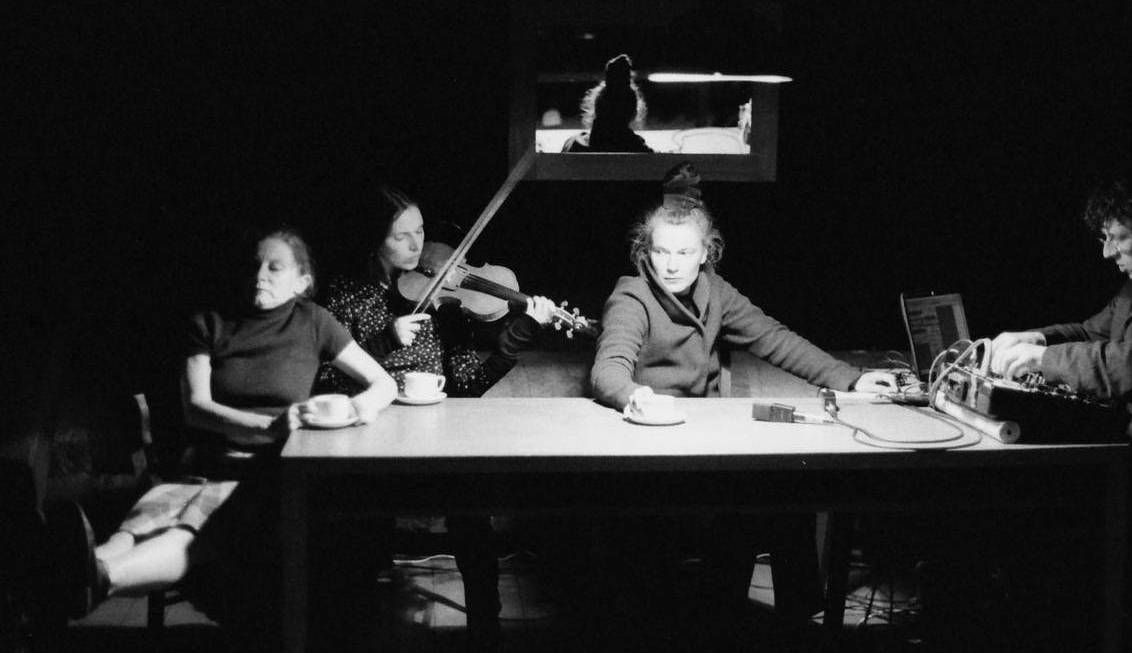
Schöner Wohnen (2003)
multimedia piece created and performed by Regina Baumgart (dance), Dorothea Schürch (voice), Tiziana Bertomncini (violin) and Thomas Lehn (synthesizers), Unterwegstheater/FNAK, Heidelberg
^ ^^
Art-Ort (2006)
dance-installation-media festival, with music for two containers of a container installation, created and performed by Tiziana Bertomncini (violin) and Thomas Lehn (analogue synthesizer), Heidelberg
^ ^^
Das Flugsus Marionettentheater Panoptikum (2013)
for two performers, together with Thomas Lehn, performed at the Reheat Festival, Nickelsdorf (AT)

^ ^^
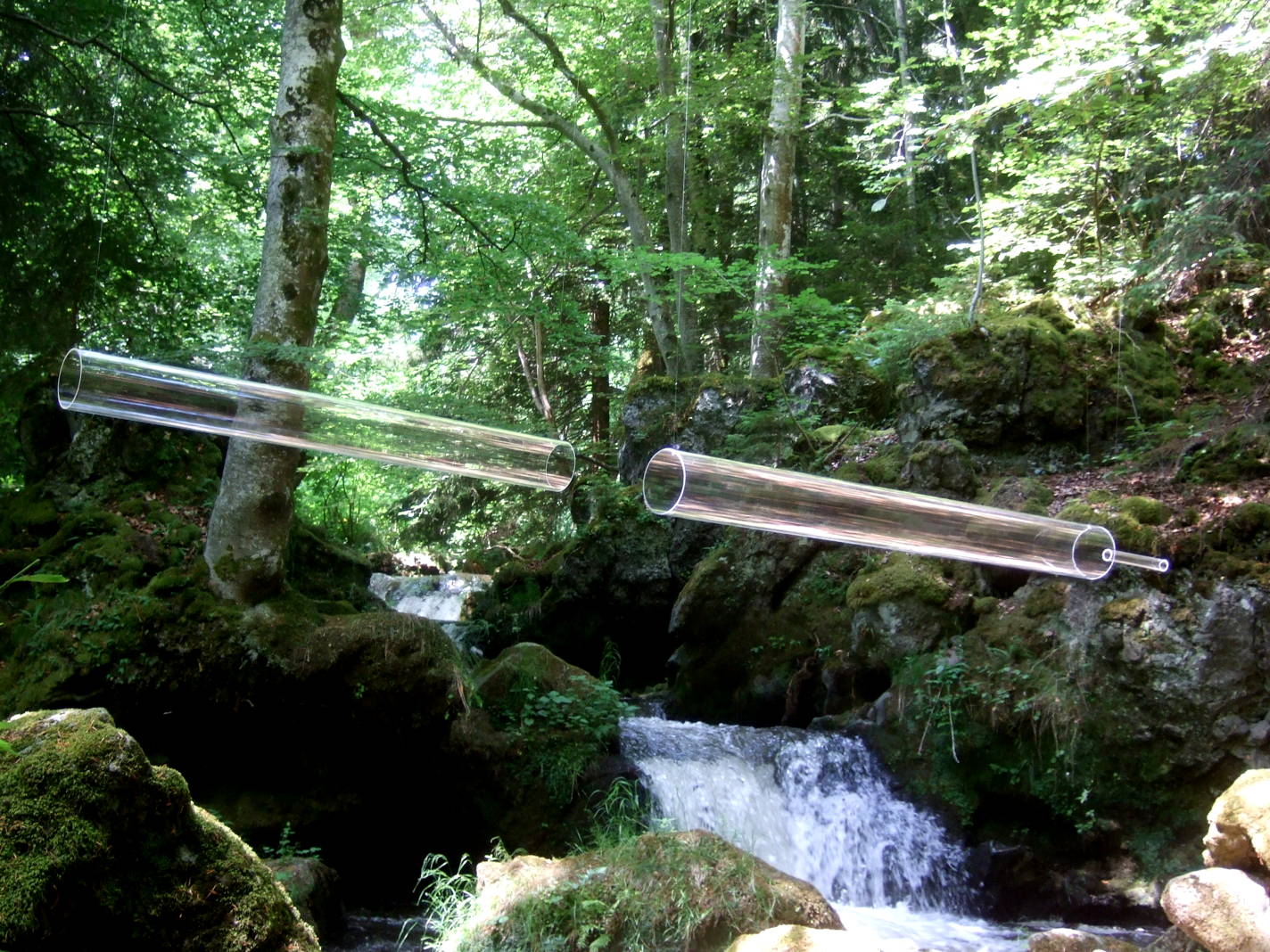
Sinfonia invisibile (2015)
sound installation by Tiziana Bertoncini, with technical assistance by Thomas Lehn; part of the land art exhibition Horizons, Art Nature en Sancy, France
© photo Thomas
Lehn
^ ^^
Luc Ferrari - Et tournent les sons dans la garrigue
Realisation and concert at LIVE ELECTRONICS by ina GRM at Centquatre Paris on 17 January 2020
performed by Tiziana Bertoncini (violin), eRikm (turntables, discs, computer), Antonin Gerbal (percussion), David Grubbs (electric guitar), Ji Youn Kang (electronics, objects), Thomas Lehn (piano, analogue synthesizer) and Dafne Vicente-Sandoval (bassoon)
video by INA grm
^ ^^
Quatuor BRAC Exntended
a quintet formed by the Quartuor BRAC and Thomas Lehn, working together since November 2020

© photo by Uli Templin/tuer7
(Quatuor BRAC) & Alain Julien (Lehn)
^ ^^
samen (2024)
Tiziana Bertoncini - violin | Peter Jakober - live electronics | Thomas Lehn - synthesizer, piano
samen, derived from the Dutch term for together, is concert project by the Slovakian-Italian violinist Tiziana Bertoncini, the Austrian composer Peter Jakober and the German pianist and analogue synthesiser performer Thomas Lehn. The three musicians first met in Cologne in 2009 and have since worked together in various larger projects, eg. ensemble]h[iatus and with the dancer Paul Wenninger. The project reflects the horizon of their individual musical practices of contemporary music creation: it is conceived as a continuous dramaturgical continuum in which compositions and improvisations merge in different ways and thus combine to create an overall form.
The premiere of this project took place on June 21st, 2024 at Reaktor in Vienna. [download flyer]
programme:
samen 1 for violin, synthesizer & live-electronics by Peter Jakober
samen 2 for violin, piano & synthesizer by Tiziana Bertoncini & Thomas Lehn
samen 3 for violin, synthesizer & live-electronics by Peter Jakober, Tiziana Bertoncini & Thomas Lehn
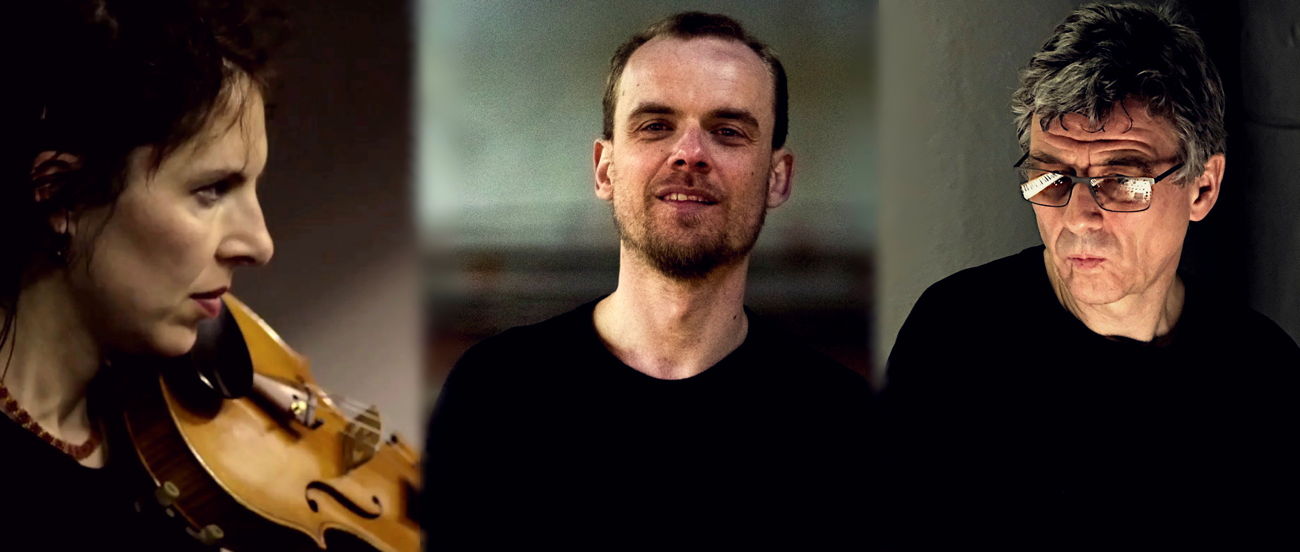
© from left to
right,photos by echoraum, Franz Reiterer, Alte Schmiede
with kind support by BMKÖS Austria and Stadt Wien Kultur


^ ^^
Open Family (2024)
Alessandra Rombolà • flute
Tiziana Bertoncini • violin
Ingar Zach • gran cassa, percussion
Thomas Lehn • analogue synthesizer
A brand new quartet formed in 2024, which will have it's world premiere on 17th November 2024 at the Alte Schmiede in Vienna during the festival Wien Modern

© from left to
right:Laki Sideris, Nazzareno Suriano, Cristina Marx/photomusix
^ ^^
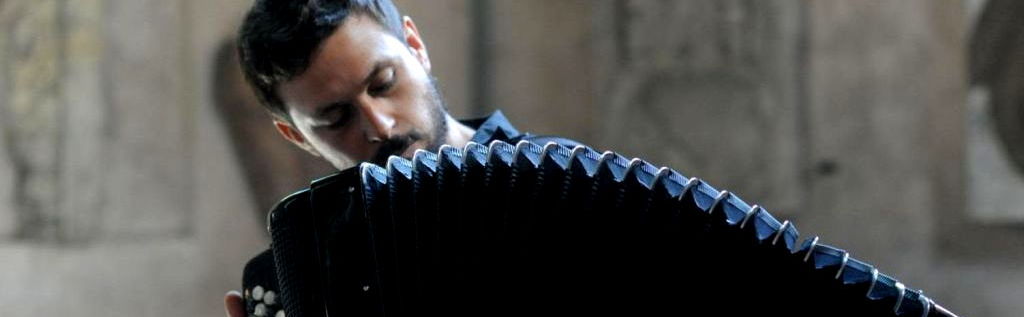
Bertoncini/Kocher/Lehn (2025)
Tiziana Bertoncini • violin
Jonas Kocher • accordion
Thomas Lehn • analogue synthesizer & sound processings
Joined by the accordionist Jonas Kocher in a premier performance in September 2025 in Biel/Bienne, Switzerland, a brand new trio was formed. A first CD entitled Critical Values has been published in spring 2026 on Swiss label bruit.
^ ^^
^
biographies
Tiziana Bertoncini | Thomas Lehn
^ ^^
Tiziana Bertoncini
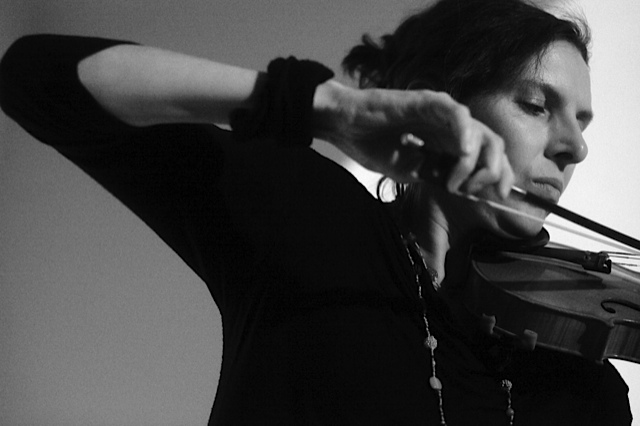
© photo by Nica
Brunova
Tiziana Bertoncini graduated with a Master in Violin at Siena Conservatory and a Master in Painting at the Fine Arts’ Academy in Carrara. Completed by Studies in Art history, and specialization masterclasses for chamber music and music didactics.
After being playing in orchestras and chamber music ensembles, she focused on contemporary music, written and improvised.
Her work is developing from interpretation ad improvisation towards composition and collaboration with artists of other medias. At the same time her interest is focused on the crossing and synthesis between visual elements and music/sound.
She has been performing in many international festivals and contexts and has been part of numerous dance, theatre, video and multi-media projects, contributing the musical part of them.
Her solo work includes composition, performance and installation.
In 2011 her electro-acoustic piece Nur Sand was awarded at the competition Ferrari (r)écouté announced by hr2-kultur, ZKM | Institute for Music and Acoustics.
She is a member of the ensemble]h[iatus, which moves in the territories of improvisation and interpretation of contemporary pieces. She was artist in residence at the Bridge guard – Residential Art/Science Centre in Stúrovo/SK, AIR Krems, Centre National de Création Musicale Césaré in Reims/F, Künstlerahus Otte1 Eckernförde and GEDOK Lübeck/D.
List of Works
work as composer, performer, sound artist
download artist portfolio
• Interno immobile
for trumpet, percussion, double bass and tape, composition commissioned by the Grabenfest, festival of contemporary music in Vienna in collaboration with ORF (2006)
• SOSIA
music performance for violinist/figure and space, created and performed in Stúrovo (SK) 2008
• Panta Rhei – Danube time space
audio-visual installation created in Stúrovo 2008
• Panta Rhei – K #1: expansion and #2: contraction
electroacoustic piece, AIR Krems 2009
• Nero Lento
composition for violinist and tape, commissioned by the Festival Hörfest, Graz 2010
• Incostanti Periferiche
electro-acoustic 21 channels composition part of the sound-installation Klanghimmel MQ, Vienna MuseumsQuartier 2011
• Nur Sand
electro-acoustic 8 channels composition presented at the ARD Radio days in Karlsruhe 2011, at the MUSLAB Muestra Internacional de Música Electroacústica in Mexico 2016 and broadcasted by SWR, WDR, Ö1, etc.
• Moira
audio-visual installation, commissioned by the Centre National de Création Musicale CÉSARÉ (Reims) and presented at the Abbaye des trois Fontaines within the Festival Entre Cour et Jardin, France 2013 and at the Festival Electriciy Equinoxe, Reims 2014
• Cabaret onirico
little nocturnal theatre for three voices, 2 violins and cello together with Matilde Malnati and Francesca Zanchi, performed at Stazione di Topolò/Postaja Topolove, Italy 2014
• Sinfonia invisibile
installation, commissioned by the festival Le Bruit de la Musique, France 2014. Selected to be part of the land art exhibition Horizons – Art Nature en Sancy, France 2015
• La fine dello spazio, la fine del tempo
la fine del tempo, electroacoustic composition, commissioned by the festival Musiques Demésurées, France 2019 and at the festival Teatri del suono, Triest (IT) 2024
• Oko
for violin and tape, premiered at the concert series Jesuiten: Kunst at the Pfarre Lainz/Vienna, performed at the Festival Teatri del Suono, Trieste (Italy) 2023
• Occhio nudo
for violin solo, premiered at the Teatri del suono festival in Vienna 2024
^
Concerts at Festivals for Contemporary and Improvised Music
Fabbrica Europa, Firenze (IT), Total Music Meeting, Berlin (DE), Fruits de Mhère, Brassy (FR), Contemporaneamente, Lodi (IT), Brückenmusik, Köln (DE), Stazione di Topolò/Postaja Topolove (IT), Hurta Cordel, Madrid (ES), Musique Action, Nancy (FR), Sonorités, Montpellier (FR), Humanoise congress, Wiesbaden (DE), Hörfest, Graz (AT), Jazz à Luz, (FR), Novelum, Toulouse (FR), Archipel, Génève (CH), November Music, Den Bosch (NL), Huddersfield Contemporary Music Festival, Huddersfield (UK), Reims Scène d'Europe, Reims (FR), Tage Neuer Musik, Graz (AT), Ring Ring, Belgrad (SRB), Art's Birthday, Plzen (CZ), Kaleidophon, Ulrichsberg (AT), Heart of Noise, Innsbruck (AT), Musiques Demésurées (FR), Wien Modern (AT), Instants Fertiles, Saint-Nazaire (FR), Irtijal, Beirut (RL), Moers Festival, (DE), Klaeng Festival, Cologne (DE), Fri Resonans, Tronheim (NO), Musica Sanae, Naples (IT), Sololowsko (PL), Berlin (DE), Musica, Strasbourg (FR), Ad Libitum, Warsaw (PL)
Tours and Concert Activity
in Italy, France, Germany, Austria, Slovakia, Poland, Czech Republic, Serbia, Norway, Holland, Switzerland, U.K., Spain, Lebanon
^
List of Collaborations
music for Dance, Theatre, Video and in general Multi-Media Projects
• Alphaomega, variazioni per violino e voce
poem by Angelo Tonelli, performed at the Festival Altramarea, Lerici 2001
• Piazza della Berlina
video by Giulia Gerace, awarded at the video-competition Raccorti Pisani, selected for the Fano International Film festival 2004
• Ortensia
choreographic piece for violin and voice, concept: Carla Bottiglieri, creation and performance: Carla Bottiglieri and Tiziana Bertoncini, performed at the end of the residence program Térraines Fértiles, Paris, 2005
• in sospensione
video-sound installation created in collaboration with Giulia Gerace for the LookAtFestval, Lucca 2010
• Sehnen
choreographic piece by Paul Wenninger with music composed in collaboration with Peter Jakober, performed at the TanzQuartier Wien, 2011 and at the festival Feedback, Wien 2015
• Yuj
choreographic-music piece by Clara Cornil and ensemble]h[iatus. Music composed and performed live by Tiziana Bertoncini, Isabelle Duthoit, Carl Ludwig Hübsch, Lê Quan Ninh. Performed at the CCAM Vandœuvre-les-Nancy, at the festival Les Rencontres Choréographiques de Seine-Saint-Dénis and at the theatre L'Espal, Le Mans, France 2015
• Animalitas
performance for children for three musicians and a dog created together with Martine Altenburger (cello) and Aurelie Maisonneuve (voice), performed at the theatre Athénor, Saint Nazaire and the Avignon OFF theatre festival, France 2016 and in other numerous theatres in France and Belgium 2017, 2018, 2019
• Étude en Rouge
concert performance inspired by Partition Rouge, anthology of North American native indians poems and chants translated and presented by Jacques Roubaud and Florence Delay created and performed together with Isabelle Jelen (indian harmonium, voice) and Monsieur Gadou (guitar, voice) at the festival Azimut, toutes! Bayonne 2018 and the festival Trente/Trente Bordeaux 2019. In January 2020 the visual artist Bruno Lahônta joined the performance; this new version was worked out during a residency at La Métive in Moutier d'Ahun, France 2020.
• Confins
short film created in collaboration with Isabelle Jelen commissioned by Le théatre de l'Arlequin France 2020
• Un autre monde
a music, poetic, choreographic and video performance by and with Tiziana Bertoncini, Isabelle Jelen, Andrea Sitter and Cyrill Babin, performed at the Festival La semaine du Bizarre at the Theâtre Berthelot, Montreuil (Paris) France 2022
• Mycophonia
audiovisual installation created together with Isabelle Jelen and Jérôme Marchand and presented at the Lieu Multiple, Poitiers and the Festival Zéro1, La Rochelle France 2024.
^
Residencies
• Bridge guard – Residential Art/Science Centre in Stúrovo, Slovakia (2008)
• AIR Krems, Austria (2009)
• Centre National de Création Musicale CÉSARÉ, Reims (2013)
• Schleswig-Holsteinischen Künstlerhaus OTTE1, Eckernförde, Germany (2015)
• GEDOK Schleswig-Holstein, Lübeck, Germany (2016)
Awards
• Nur Sand, electro-acoustic composition awarded at the competition Ferrari (r)écouté announced by hr2-kultur and ZKM | Institute for Music & Acoustics, 2011
Publications (CDs)
• Interno immobile, as part of CD Ohne Worte ORF CD 475, 2006
• Tiziana Bertoncini and Thomas Lehn Horsky Park, AnotherTimbre at40, 2011
• Quatuor Brac Instants Chavirés, blumlein CD-A022, 2012
• Nur Sand published in JETZT a compilation CD on Wergo 20662, 2012
• Quatuor Brac Hall des Chars, published on blumlein CD-A026, 2014
• enesemble]h[iatus Peter Jakober, published on the label Césaré, 2017
^
Radio Productions
• Panta Rhei – Danube time space
in Studio Akustische Kunst WDR3, 2015
• Im Spannungsfeld von Improvisation und Interpretation
a double portrait of Tiziana Bertoncini and Thomas Lehn by Nina Polaschegg, SWR2 NOWJazz 2017
Teaching
• 1996 to 2001 she was guest artist-lecturer during the New York University summer courses in Italy, leading master classes of improvisation.
• Mutual Feelings, tutoring a student of Prof. Riccardo Vaglini composition class at the Conservatory Benedetto Marcello in Venice, 2015
• Improvisation workshops in collaboration with Thomas Lehn in Tarcento, Milano, Bolzano (IT) and Warsaw (PL)
^ ^^
^ ^^
Thomas Lehn
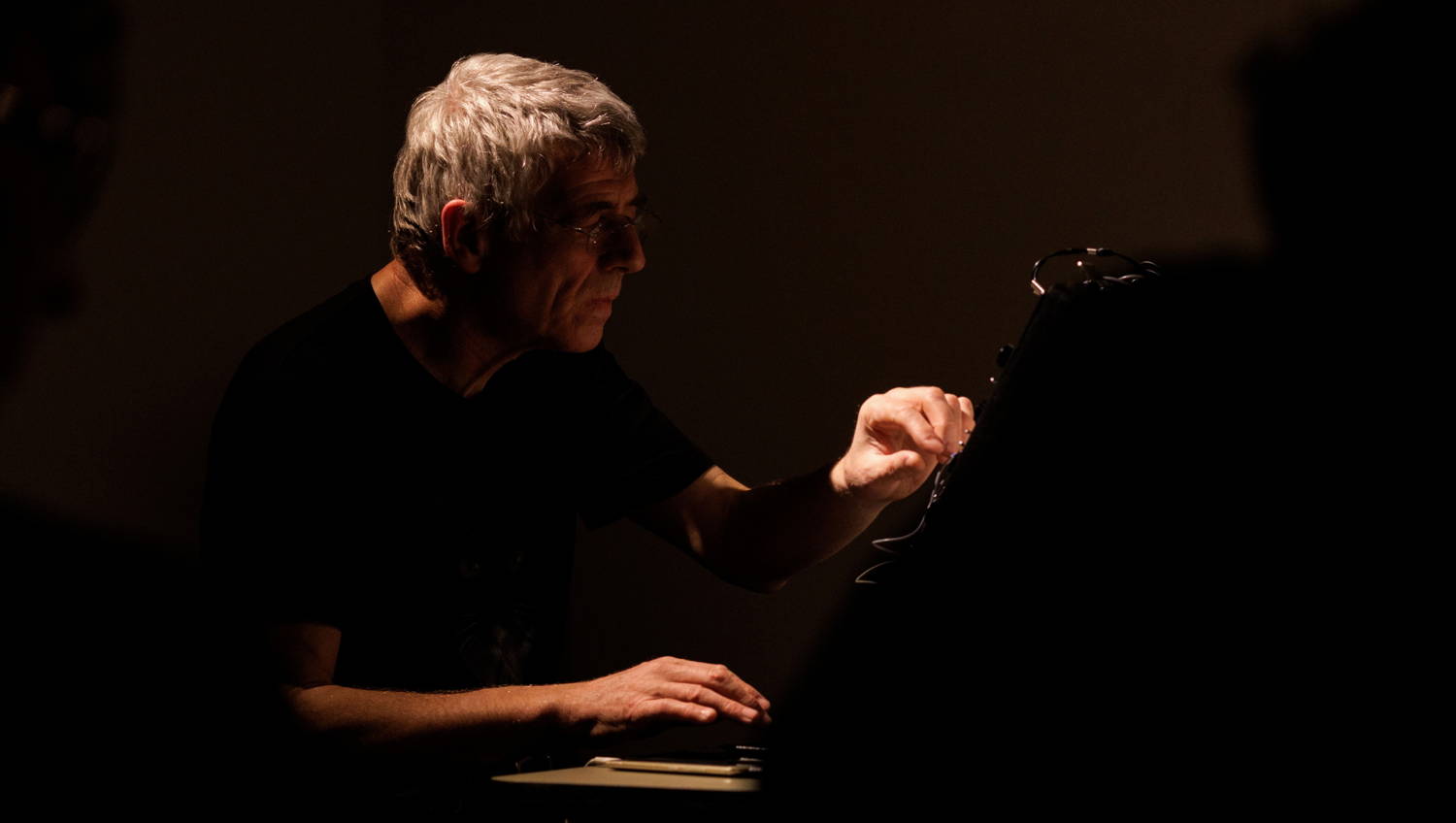
© photo by Urs
Althaus
Thomas Lehn is a pianist, analogue synthesizer player and a composer-performer of contemporary music. He has been one of the most innovative and successful musical personalities in the field of electroacoustic music in the practices of improvisation and composition for years. He was trained as a sound engineer and pianist at the music academies in Detmold and Cologne from 1979 to 1987.
Rooted in the experiences as an pianist, he has been developing his unique live electronic music since the early 1990s, focusing on the use of analogue synthesizer systems, which allow direct access to the elements of electronic sound synthesis.
As a synthesizer interpreter – live and on CD studio productions – he has realized works by Éliane Radigue, Roman Haubenstock-Ramati, Bogusław Schaeffer and Zbigniew Karkowski, among others. He was soloist in the world premiere of Peter Jakober's dort with Klangforum Wien at musikprotokoll festival and in the CD recording of Christopher Fox's Topophony with the WDR Symphony Orchestra.
Thomas Lehn is pianist and founding member of ensemble]h[iatus, since 2006 dedicated to contemporary improvisation and interpretation, with whom he had premierred commissioned works by Vinko Globokar, Anthony Pateras, Jennifer Walshe, Jürg Frey a.m.o. .
He demonstrates continuity in longstanding activities in ensembles such as KONK PACK, TOOT, THERMAL, MIMEO, SPEAK EASY, 6ix or duos with Marcus Schmickler, Tiziana Bertoncini, Gerry Hemingway and Paul Lovens. More recent are trios with John Butcher the pianists John Tilbury and Matthew Shipp, the trios LDL with Urs Leimgruber and Jacques Demierre, electrovoX with Ute Wassermann and Richard Scott, the quintet Quatuor BRAC Extended and Companion Species in duo with Jennifer Walshe.
Concert tours have taken him throughout Europe, Asia, Australia, New Zealand, Japan, Canada and the USA. His artistic work is documented on about 100 recordings.
^
Selected publications
complete discography here
• LDL the eerie glow of jellyfish (2026) RPR1240 www.relativepitchrecords.com
• ensemble]h[iatus Jürg Frey Je Laisse À La Nuit Son Poids D’ombre (2025) at249
• LDL in the endless wind (2024) WER076 www.wideearrecords.ch
• SOUNDBRIDGES the red and the blue (2024, vinyl LP) IDNO0021
• John Butcher/Thomas Lehn/John Tilbury Lights (2023) Fataka 16 fataka.com
• THERMAL Ice In A Hot World 78U unsounds.com
• Butcher/Lehn/Robair shaped & chased (2022, vinyl LP] nvnc-lp026 Ni-Vu-Ni-Connu
• Blume/Lehn/Muche/Vandermark SOUNDBRIDGES (2022) jw219
• John Butcher/Thomas Lehn/Matthew Shipp The Clawed Stone ROG-0099
• V/A - Roman Haubenstock-Ramati Decisions/Study in Form BR1064/1065 l
includes a realisations of Decisions by Thomas Lehn
• speak easy @ Konfrontationen | ccs 99 | www.confrontrecordings.com
• Leimgruber/Demierre/Phillips & Lehn Willisau | JW191 | www.jazzwerkstatt.eu
• Christopher Fox Topophony | hat[now]ART 211 | www.outhere-music.com
WDR Symphony Orchestra, conductor: Ilan Volkov soloists: John Butcher, Thomas Lehn
• Lehn/Schmickler Neue Bilder | www.mikroton.net
• John Butcher/Thomas Lehn/Matthew Shipp Tangle | www.fataka.net
• KONK PACK Doing the Splash | www.knockemdeadrecords.com
• John Butcher/Thomas Lehn/John Tilbury Exta | fataka.net
• PRES Scores: Boguslav Schaeffer Electronic Symphony | www.boltrecords.pl
• 6ix Almost Even Further | www.leorecords.com
• Lehn/Schmickler Live Double Séance | editionsmego.com
• MIMEO Wigry (Double LP) | www.monotyperecords.com
• SHIFT Songs from Aipotu (www.leorecords.com)
• Urs Leimgruber/Thomas Lehn Lausanne | www.for4ears.com
• speak easy backchats | www.creativesourcesrec.com
• TOOT two | www.anothertimbre.com
• Gerry Hemingway & Thomas Lehn kinetics | Auricle Records
• Frédéric Blondy/Thomas Lehn obdo | www.anothertimbre.com
^
Thomas Lehn has been touring in Australia, Austria, Belgium, Canada, Croatia, Czech Republic, Denmark, England, Finland, France, Germany, Hungaria, Ireland, Israel, Italy, Japan, Latvia, Lebanon, Netherlands, New Zealand, Norway, Poland, Portugal, Russia, Serbia, Scotland, Slovakia, Slovenia, Spain and Sweden.
He has been involved in projects promoted by the German Goethe-Institut and repeatedly supported by its local departments in Beirut, Belgrade, Boston, Bratislava, Budapest, Chicago, Copenhagen, Dublin, Glasgow, Lille, Lissabon, London, Manchester, Marseille, Milano, Montreal, Moscow, Palermo, Riga, Rome, San Francisco, Singapore, Taipei, Tel Aviv, Tokyo, Toronto, Warsaw, Wellington and York.
^
^^
^
audio
• excerpts of CD Horsky Park CD:
excerpt 1 Galaverna (7:23)
excerpt 2 Galaverna (6:15)
excerpt 3 Galaverna (5:09)
excerpt Moss Agate (6:54)
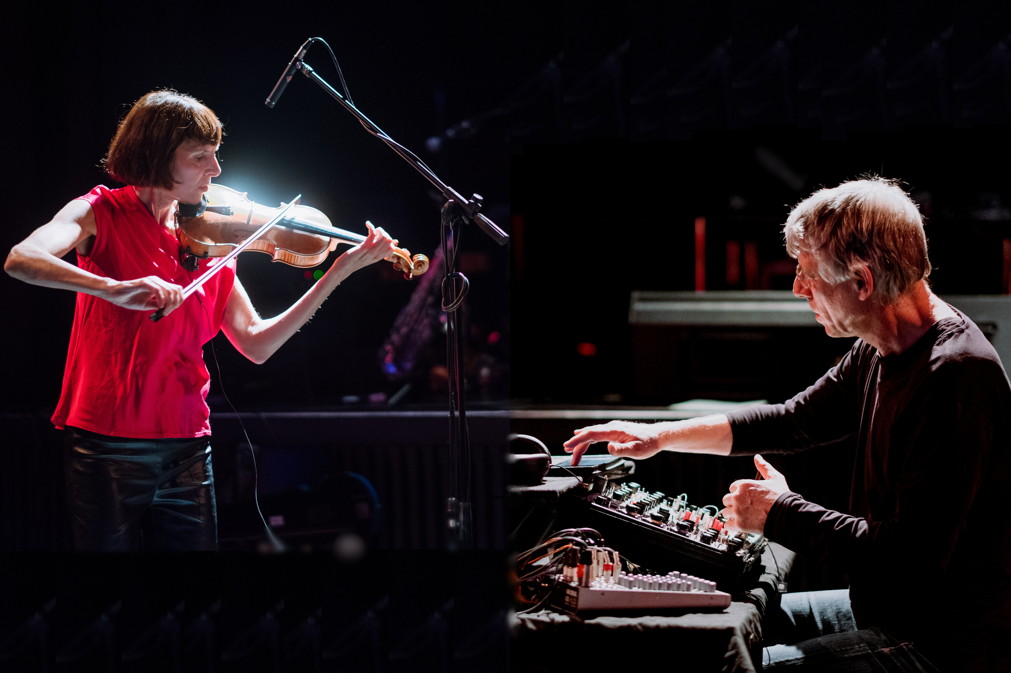 photo © Michael Pezzei
^
video
• live @ ARTist's / Interpenetration in Graz on January 15, 2026 :
• excerpt of concert in Bressanone/Italy on October 8, 2022 :
• stream concert with Katharina Klement, Alte Schmiede Vienna, June 14, 2020 :
• live at the music unlimited festival, feat. Jakob Gnigler, November 5, 2021
^
downloads
info portfolio pdf
info plain text with internal and external links
press photos
technical rider
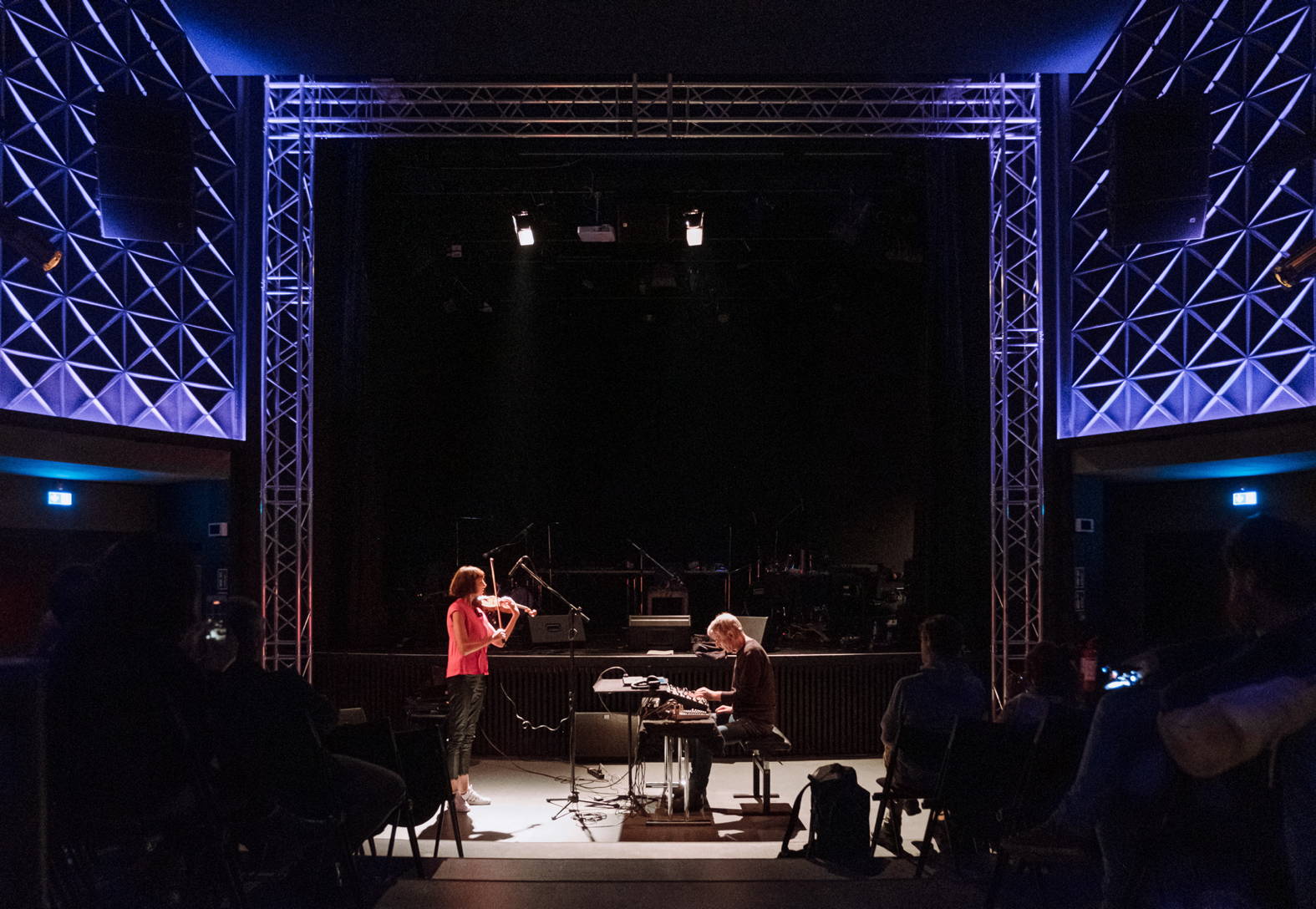
photo © Michael
Pezzei
^
^
tour dates
booking periods | upcoming | past
^ ^^
future booking periods
tba
^ ^^
upcoming dates
2026
Thu. October 15, Berlin @ exploratorium berlin (with Open Family)
Sat. October 17, Lübeck @ Waldzimmer (with Open Family)
Fri. November 13, Prague @ Alternativa Festival (with Open Family)
Sun. November 15 (16h30), Metz @ fragm/ent (with Open Family)
with kind support by BMWKMS Austria

© Matt Ingalls
^ ^^
past dates
2026
Sun. June 21, Hamburg @ Festival Blurred Edges (with Open Family)
Wed. March 18, Paris @ IRCAM (with ensemble]h[iatus)
Wed. January 21, Vienna @ Theater am Werk Petersplatz / Der blöde dritte Mittwoch
Thu. January 15, Graz @ ARTist’s / Interpenetration [video]
2025
Thu. November 27, Vienna @ Reaktor / Wien Modern (with ensemble]h[iatus)
Wed. September 17, Biel/Bienne @ La Voirie / KartellCulturel (in trio with Jonas Kocher)
Tue. September 16, Zürich @ Das Institut (in trio with Daniel Studer)
Sun. September 14, Grenoble @ PAYSAGES | COMPOSÉS (with Quatuor BRAC Extended)
Sat. September 13, St. Etienne @ La Cour (with Quatuor BRAC Extended)
Fri. September 12, Luzern @ Ahoi
with kind support by BMWKMS Austria
Wed. July 2, Ajdovščina/SI @ Klub Štala
Sat. June 14, Vienna @ Jesuitenkirche / Jesuiten:Kunst
Tue. June 3, Vienna @ echoraum (with Nina Polaschegg & Bruno Strobl)
2024 ^ ^^
Sun. November 17, Vienna @ Alte Schmiede / Wien Modern (with Open Family)
–
USA Tournee 2024
Wed. September 18, Baltimore @ Johns Hopkins Peabody Institute (workshop)
September 19-22, Baltimore @ Theatre Project / High Zero Festival
Fri. September 20, Baltimore @ UMBC University of Maryland (workshop)
Mon. September 23, Houston @ nameless sound
Tue. September 24, Houston @ nameless sound (workshops)
Thu. September 26, Los Angeles @ Scribble / The Unwrinkled Ear
Fri. September 27, San Francisco @ C4NM (with Chris Brown & John Bischoff)
Sat. September 28, Berkeley @ Tom's Place (with Jon Raskin, Gino Robair, Tom Djll)
Sun. September 29, Oakland @ sfsound (with Oakland Reductionist Orchestra)
Tue. October 1, Chicago @ Elastic (with Emily Beisel & Michael Zerang)
Wed. October 2, Toledo @ Robin Wood House
Thu. October 3, Pittsburgh @ Brillobox
Fri. October 4, Philadelphia @ Bowerbird
Sat. October 5, Brooklyn @ Roulette / Phill Niblock Tribute
Sun. October 6, Brooklyn @ Artifact Sound Series
with kind support by BMKÖS Austria and austrian cultural forum new york city

–
Thu. June 27, Ajdovscina/SI @ Kluba Štala
Fri. June 21, Vienna @ Reaktor
Bertoncini/Lehn & Peter Jakober – samen [download flyer]
world premiere of a trio performance including compositions and improvisations by Tiziana Bertoncini (violin), Thomas Lehn (piano, analogue synthesizer) and Peter Jakober (electronics)
with kind support by BMKÖS Austria and Stadt Wien Kultur
2023 ^ ^^
Sun. November 26, Munich @ MUCCA / arch-musik (with Udo Schindler)
Sat. November 25, Stuttgart @ SAAL FREI
Fri. November 24, Metz @ Centre Pompidou Metz / fragm/ent (with Quatuor BRAC Ext.)
Thu. November 23, Saarbrücken @ BuckBlech-Werkstatt
These concerts on 23-26 November 2023 are made possible with the kind support of BMKÖS
Fri. February 17, Leipzig @ LiLe – cancelled
Fri. August 11, Staranzano @ dobiarteventi / dobialab
Sat. August 12, Topolò @ robida / Academy of Margins
2022 ^ ^^
Fri. December 16, Berlin @ biegungen in ausland (with Quatuor BRAC)
Thu. December 15, Berlin @ REH
Sat. November 12, Vienna @ REAKTOR / Wien Modern (with ensemble]h[iatus)
Fri. November 11, Vienna @ REAKTOR / Wien Modern (with ensemble]h[iatus)
Sat. October 8, Bressanone @ Cinema Astra / IMPROVESTIVAL NR. 1
Wed. August 31, Willisau @ Jazz Festival Willisau (with Pack of Ten)
Mon. April 11, Vienna @ Celeste
Sun. April 10, 17h Vienna @ TONSPUR_festival
2021 ^ ^^
Mon. November 15, Zürich @ Moods (with Pack of Ten)
Sun. November 14, Zürich @ Moods
Sat. November 5, Wels/AT @ music unlimited (with Jakob Gnigler)
Sat. October 2, Vandoeuvre/FR @ Musique Action #37 (with ensemble]h[iatus)
Tue. September 28, Strasbourg @ Musica Festival (with ensemble]h[iatus)
Thu. September 16, Schwaz @ Klangspuren (with ensemble]h[iatus)
2020 ^ ^^
Sun. October 4, Gradignan/FR @ Festival MAD (with ensemble]h[iatus)
Fri. September 18, Schwaz @ Silbersaal / Klangspuren Schwaz
Sat. September 5, Berlin @ concepts of doing (with Kvin Maatt)
Sun. June 14, Vienna @ Alte Schmiede (with Katharina Klement)
Fri. May 15, Vienna - Houston @ Goethe Popup Houston stream performance
April 1-12, USA Tour – cancelled
April 14-18, Mexico Tour – cancelled
March 13-15, Frankfurt @ MAK / sound 48H silence – cancelled
Wed. March 11, Wien @ Theatermuseum – cancelled
Fri. January 17, Paris @ Centquatre / GRM (with a Luc Ferrari ensemble) video docu
2019 ^ ^^
Fri. December 13, Vienna @ echoraum (with speak easy extended)
Sun. December 1, Berlin @ studioboerne (with Kvin Maatt)
Fri. October 18, Vienna @ QUANTEN – Kammer für Musik (with Thomas Stempowski)
Fri. October 11, Warsaw @ Festival ad libitum
Sun. October 6, Albi/FR @ Festival Riverrun
Thu. October 3, Albi/FR @ Festival Riverrun (with ensemble]h[iatus)
Tue. October 1, Strasbourg/FR @ Festival Musica Festival (with ensemble]h[iatus)
Mon. September 30, Reims/FR @ Taittinger Champagne (with ensemble]h[iatus)
Fri. September 27, Cologne @ Alte Feuerwache (with Dušica Cajlan & Georg Wissel)
Thu. September 26, Cologne @ Alte Feuerwache (with ensemble]h[iatus)
Sun. June 23, Berlin @ studioboerne (with Kvin Maatt)
Fri. June 21, Besancon @ Frac / La Fête de la Musique (with ensemble]h[iatus)
Sat. March 30, Bolzano @ Bunker
Fri. March 29, Bologna @ Teatro San Leonardo / Centro di Ricerca Musicale
2018 ^ ^^
Mon. December 10, Vienna @ Celeste
Sun. November 18, Wien @ Alte Schmiede / Wien Modern (with ensemble]h[iatus)
Fri. October 5, Trondheim @ Kunsthall Trondheim / Festival Fri Resonans
Wed. October 3, Bergen @ Gimle Kulturhus / nyMusikk Bergen 40 år
Tue. June 19, Toulx-Sainte-Croix @ Eglise Toulx-Sainte-Croix (with ensemble]h[iatus)
Sat. April 28, Pisa @ Cantiere San Bernardo
Fri. April 27, Roma @ B-folk
Thu. April 26, Roma @ Blutopia
Tue. April 24, Modena @ OM / Baed #9
Sun. April 22, Milano @ Takla
Wed. February 14, Firenze @ Tempo Reale / Frittelli Arte Contemporanea
2017 ^ ^^
Sat. November 18, Cologne @ KLAENG Festival / Stadtgarten
November 14-16, Clermont-Ferrand @ Musiques Démesurées (with ensemble]h[iatus)
Fri. October 13, Brno/CZ @ Skleněná Louka / Exposition of New Music Festival
Mon. October 2, Klagenfurt @ raj/Verein für Innenhofkultur (with Schiller & Polaschegg)
Sat. September 30, Ottensheim @ Gasthaus zur Post / KOMA (with Christoph Schiller)
Fri. September 29, Wien @ echoraum (with Christoph Schiller & Nina Polaschegg)
Fri. April 7, Beirut/LE @ IRTIJAL Festival
2016 ^ ^^
November 25 - 26, St. Nazaire/FR @ Théâtre Athénor (with ensemble]h[hiatus)
Sat. November 19, Vienna @ brick-5 (with ensemble]h[hiatus)
Sat. January 30, Brive-la-Gaillarde/FR @ Les Treize Arches (with ensemble]h[hiatus)
Sun. January 10, Berlin @ exploratorium
2015 ^ ^^
Sat. December 12, Vienna @ echoraum (with Nina Polaschegg)
Fri. November 27, Pardubice/CZ @ Divadlo 29 (trio NOIZ with with Petr Vrba)
November 18-20, Aubusson/FR @ Théâtre Jean Lurçat (with ensemble]h[hiatus)
Soundtrips NRW #25
Mon. September 7, Bonn @ Alte Kirche
Sun. September 6, Münster @ cuba / Blackbox
Sat. September 5, Bielefeld @ Bunker Ulmenwall
Fri. September 4, Hagen @ Villa Post
Thu. September 3, Bochum @ Kunstmuseum
Wed. September 2, Essen @ Goethebunker
Tue. September 1, Cologne @ Loft
Mon. August 31, Düsseldorf @ Filmwerkstatt
Sun. August 30, Duisburg @ Lehmbruck Museum
Sat. August 29, Wuppertal @ ORT
Sat. July 18, Topolò @ Stazione di Topolò Festival
Sat. June 27, Munich @ MUG / Offene Ohren
Fri. June 26, OttensheimAT @ Altes Amtshaus / KOMA
Fri. June 19, Innsbruck/AT @ Heart of Noise Festival (trio NOIZ with with Petr Vrba)
Fri. May 28, Paris @ Festival imprudences / Saint Merry
Sun. May 3, Ulrichsberg/AT @ Kaleidophon Festival
Tue. April 14, Vienna @ Strenge Kammer/Porgy & Bess (with Castelló, Charles, Vrba)
Tue. March 31, Basel @ FIM
Mon. March 30, Freiburg @ E-Werk / Kammerbühne
Sun. March 29, Karlsruhe @ Badischer Kunstverein
Sat. March 28, Mannheim @ Einraumhaus
Fri. March 27, Wiesbaden @ Nassuischer Kunstverein (with Dirk Marwedel)
Wed. March 25, Cologne @ Kunsthaus Rhenania / Three’s a crowd #3
Tue. March 24, Hannover @ Oberdeck
Sat. March 21, Berlin @ Ausland / Biegungen
Fri. March 20, Hamburg @ Linker Laden / Frequenzgänge 49
Thu. March 19, Bremen @ MIB
Fri. January 16, Plzn/CZ @ Papirna, Art's Birthday Festival (trio NOIZ with with Petr Vrba)
Thu. January 15, Prague @ Školská 28 Gallery
2014 ^ ^^
Tue. October 1, Vienna @ Galerie Mana
Mon. May 26, Belgrade @ RING RING Festival (with ensemble]h[hiatus)
Sat. May 24, 18h, Graz/AT @ tage neuer musik graz (with ensemble]h[hiatus)
Tue. April 8, Montreuil/FR @ Théâtre Berthelot (with ensemble]h[hiatus)
Thu. April 3, Reims/FR @ Césaré (with ensemble]h[hiatus)
Thu. March 27, Tulle/FR @ Théâtre des Sept Collins (with ensemble]h[hiatus)
2013 ^ ^^
Thu. December 19, Stuttgart @ Akademie Schloss Solitude (with ensemble]h[hiatus)
Sat. December 14, Stuttgart Bad Cannstatt @ stromraum
Sun. December 1, Villefavard/FR @ Ferme de Villefavard (with ensemble]h[hiatus)
Tue. November 26, Tulle/FR @ Théâtre des Sept Collins (with ensemble]h[hiatus)
Sun. August 24, Nickelsdorf @ Reheat Festival
Sun. August 18, Murau/AT @ Kapuzinerkirche / Hotel Pupik Schrattenberg
Sat. July 20, Île de Vassivière/FR @ Destination Ailleurs (with ensemble]h[hiatus)
Sun. July 21, Île de Vassivière/FR @ Destination Ailleurs (with ensemble]h[hiatus)
Sat. June 8, Beynac-et-Cazenac/FR @ Parvis de l'Église (with ensemble]h[hiatus)
Tue. April 23, Vienna @ VELAK Gala #76 / Brut Konzerthaus
2012 ^ ^^
Sat. Dec. 8, Reims/FR @ Césaré (with ensemble]h[hiatus)
Thu. November 22, Reims @ Villa Douze (with ensemble]h[hiatus)
Wed. October 19, Pisa @ Centro Espositivo (with Eugenio Sanna)
July 13-15, Schrattenberg/AT @ Hotel Pupik (as part of a performance by Katharina Klement)
2011
Sat. December 3, Cologne @ festival Schlüsselwerke Neuer Musik (with hiatus)
Thu. November 24, Huddersfield @ hcmf festival (with ensemble]h[hiatus)
Sat. November 12, Den Bosch @ November Music (with ensemble]h[hiatus)
Sat. September 10, Cologne @ Kölner Musiknacht (with ensemble]h[hiatus)
Sat. May 21, Vienna @ e_may festival (trio zeitecht with Elisabeth Harnik)
Sat. April 23, Aubusson/F @ Ecole Nationale d'Art et de Design (with ensemble]h[hiatus)
Wed. April 13, Cologne @ WDR3: Studio Elektronische Musik (with Marcus Schmickler)
Thu. March 24, Geneve @ Archipel Festival (part of a project by Jacques Demierre)
Sat. March 19, Innsbruck/AT @ pmk
Sun. March 13, Vienna @ St. Ruprecht (with Talvi Nurgamaa and Thomas Grill)
2010
Sun. November 21, Toulouse @ Festival Novelum (with ensemble]h[hiatus)
Thu. November 11, Milano @ ExPulsi Festival
Sun. September 12, Cologne @ festival Schlüsselwerke Neuer Musik (with hiatus)
Tue. May 18, Gueret @ Conservatoire (with ensemble]h[hiatus)
Sun. May 9, Sankt Augustin/DE @ Kunsthalle Hangelar
Sun. March 14, Vienna @ echoraum (trio zeitecht with Elisabeth Harnik)
Sat. March 13, Graz @ Festival Hörfest (trio zeitecht with Elisabeth Harnik)
Sat. January 16, Cologne @ Kunst-Station Sankt Peter (with ensemble]h[hiatus)
2009
Sat. December 12, Aubusson @ Musée de la tapisserie (with ensemble]h[hiatus)
Sun. September 20, Montreuil @ Instants Chavirés (with ensemble]h[hiatus)
Sat. September 19, Villefavard/France @ Ferme de Villefavard (with ensemble]h[hiatus) Fri./Sat. June 19 & 20, Cologne @ Alte Feuerwache (as curators)
Fri. April 17, Graz @ V:NM Festival (trio zeitecht with Elisabeth Harnik)
Wed. March 11, Cologne @ V:NM Festival (trio zeitecht with Elisabeth Harnik)
2008
Sat. September 20, Koeln @ Kunst-Station Sankt Peter (with ensemble]h[hiatus)
Tue. May 6, Vandoeuvre @ Salle de fetes (with ensemble]h[hiatus)
Wed. April 30, Koeln @ Kunst-Station St. Peter (with ensemble]h[hiatus)
Sun. April 27, Koeln @ Institut Francais (with ensemble]h[hiatus)
Tue. March 25, Vandoeuvre @ CCAM (with ensemble]h[hiatus)
Sun. March 23, Moutier @ La Metive (with ensemble]h[hiatus)
Sat. March 22, Boussac @ Ecole Primaire (with ensemble]h[hiatus)
Fri. February 8, Sturovo @ Základná umelecká skola F. Liszta
2007
Sat. July 14, Toulouse @ Theatre le Ring (with ensemble]h[hiatus)
Sat. May 19, Vandoeuvre @ CCAM (with ensemble]h[hiatus)
Fri. April 13, Toulouse @ Theatre le Ring (with ensemble]h[hiatus)
2005
Sat. July 16, Tarcento @ Hybrida Space
2004
Sun. July 4, Cologne @ Deutzer Bruecke
2003
Tue. September 23, Lodi @ Festival Musicale ContemporaneaMente 2003
Thu. February 27, Lyon @ Kafe Myzik
Wed. February 26, Geneva @ Cave 12
2002
Sat. November 2, Berlin @ Podewil
Fri. June 28, Kassel @ Loft
© photo by Franz
Reiterer
^
^^
^
updated on August 11, 2026